
Ethical AI Boundaries in Healthcare
What AI Should and Should Not Be Used For
Lavette Minn
1/5/20262 min read
Artificial intelligence is becoming deeply embedded in healthcare operations, marketing, and communication. While AI offers efficiency and insight, it also raises important ethical questions, especially in environments where patient trust and safety are paramount.
Understanding ethical AI boundaries is not optional. It is essential.
Why Ethical Boundaries Matter in Healthcare AI
Healthcare differs from other industries because decisions directly affect human well-being. AI tools that are used without clear boundaries can unintentionally create harm, confusion, or risk.
Ethical AI boundaries ensure that technology supports healthcare professionals rather than replacing judgment, care, or accountability.
Without these boundaries, organizations may face:
Patient trust erosion
Ethical conflicts
Compliance exposure
Reputational damage
Overreliance on automation
What Ethical AI Use Looks Like in Healthcare
Ethical AI use is intentional, limited, and supervised. It prioritizes patient dignity, data protection, and professional responsibility.
Appropriate AI use in healthcare may include:
Administrative workflow support
Operational efficiency and analysis
Documentation assistance
Educational content development
Internal process optimization
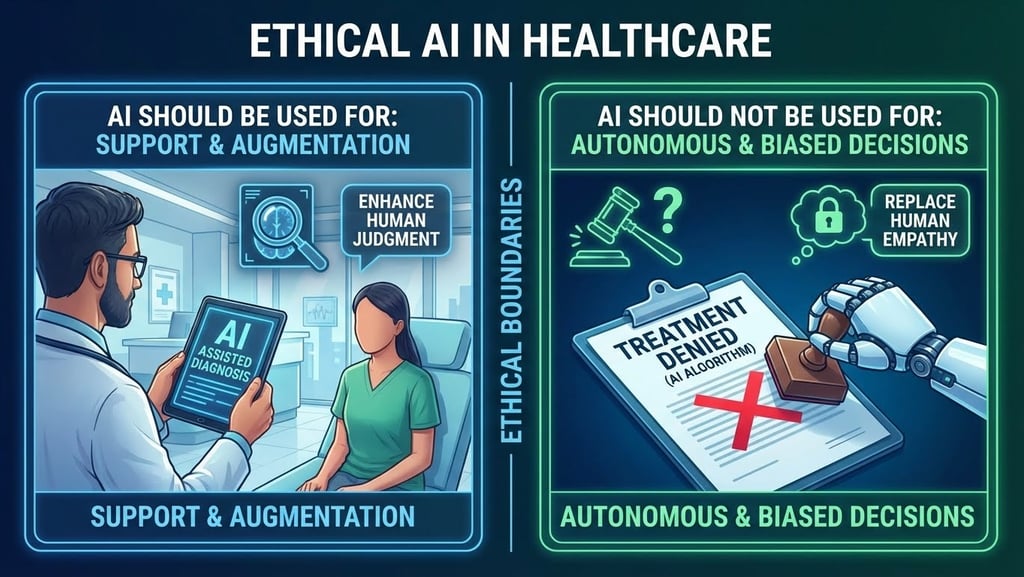
In these areas, AI functions as a support tool, not a decision-maker.
What AI Should Not Be Used For in Healthcare
Clear boundaries protect both patients and organizations.
AI should not be used to:
Diagnose medical or mental health conditions
Replace clinical judgment or treatment planning
Provide medical or therapeutic advice
Make autonomous patient care decisions
Interpret protected health information without safeguards
These responsibilities require human expertise, accountability, and ethical oversight.
The Risk of Over-Automation in Healthcare Communication
Automation can improve efficiency, but excessive automation can feel impersonal or unsafe in healthcare contexts.
Risks of over-automation include:
Loss of empathy in patient communication
Inaccurate or inappropriate responses
Reduced trust in digital interactions
Ethical discomfort for patients
Ethical AI strategy balances automation with human review and discretion.
How Compliance and Ethics Intersect in AI Strategy
Ethical AI boundaries work hand in hand with compliance-aware planning.
A responsible approach considers:
Data privacy and protection
Transparency in communication
Clear usage policies for staff
Documentation of AI-supported workflows
Ongoing monitoring and review
This intersection protects organizations while supporting innovation.
The Role of Leadership in Ethical AI Adoption
Ethical AI adoption begins with leadership.
Healthcare leaders must:
Define acceptable AI use cases
Establish clear internal guidelines
Educate teams on limitations and risks
Encourage critical thinking over automation
Maintain accountability for outcomes
Without leadership oversight, AI adoption becomes reactive rather than strategic.
Why Ethical AI Boundaries Support Healthcare Branding
Brand trust is built on responsibility and transparency.
When healthcare organizations communicate clear ethical boundaries:
Patients feel safer and more respected
Messaging remains honest and accurate
Digital experiences feel intentional
Brand credibility is strengthened
Ethical AI use reinforces a brand’s commitment to care, not convenience.
Who Should Prioritize Ethical AI Strategy
Ethical AI strategy is especially important for:
Mental health providers
Medical and specialty practices
Wellness and concierge healthcare brands
Public health organizations
Healthcare startups building credibility
These organizations benefit from clarity before implementation.
Moving Forward with Responsibility
AI will continue to evolve, but ethical responsibility remains constant.
Healthcare organizations that define boundaries early are better equipped to adapt, innovate, and scale without compromising patient trust or professional integrity.
Ethical AI use is not about limitation. It is about leadership.
Final Thoughts
AI is a powerful tool, but it must be guided by ethics, education, and strategy. Clear boundaries ensure that AI supports healthcare rather than reshaping it in unintended ways.
Responsible use protects patients, teams, and brands alike.
Start with Strategic Assessment
Every engagement with Blue Diamond Brandz™ begins with Digging for Diamondz, a complimentary 20-minute consultation designed to assess AI boundaries, compliance considerations, and strategic opportunities.
Book your Digging for Diamondz consultation to get started.
LETS CONNECT
Building brands with strategy and healthcare expertise.
contact me
stay in the loop
info@lavetteminn.com
800-687-7812 ext 1000
© 2026. All rights reserved. Designed by Blue Diamond Brandz